
Introduction
Booking a hotel for a three-night trip is easy. Booking accommodation for eight weeks is a different problem. A hotel offers familiar service and instant convenience, while a serviced apartment gives travelers more space and a place that works like a home.
The choice affects more than comfort. It shapes total accommodation cost, employee productivity, booking workload, flexibility, and how well an employer can see where its people are.
US extended-stay hotel demand is growing, with room nights up 6.4% year over year in Q3 2026, according to Business Travel News. That figure covers extended-stay hotels only, not apartments, yet it shows how many organizations now plan for longer stays.
This article compares both options on cost, space, amenities, service, flexibility, and oversight.
Key Takeaways
- Serviced apartments add kitchens and living space; hotels center on daily service.
- Apartments often suit multi-week assignments, relocations, and crews.
- Compare total cost, not the nightly rate.
- Check housekeeping, security, cancellation terms, and reporting before booking.
Serviced Apartments vs Hotels: Quick Comparison
Cost and total trip value
The nightly rate is only the starting point. No public dataset gives a reliable like-for-like US cost comparison for 3+ week stays, so build your own from these line items:
- Meals and incidentals (the federal GSA per diem is $68 to $92 daily for meals, a useful budgeting benchmark)
- Laundry
- Parking (one Charlotte hotel lists $61 daily valet)
- Facility fees, taxes, and cleaning charges
- Extra rooms or workspace
Some extended-stay hotels bundle items. Many, for example, include free hot breakfast. Since May 2025, the FTC's fee rule requires upfront total pricing that includes mandatory fees, so ask for the all-in price.
Space and layout
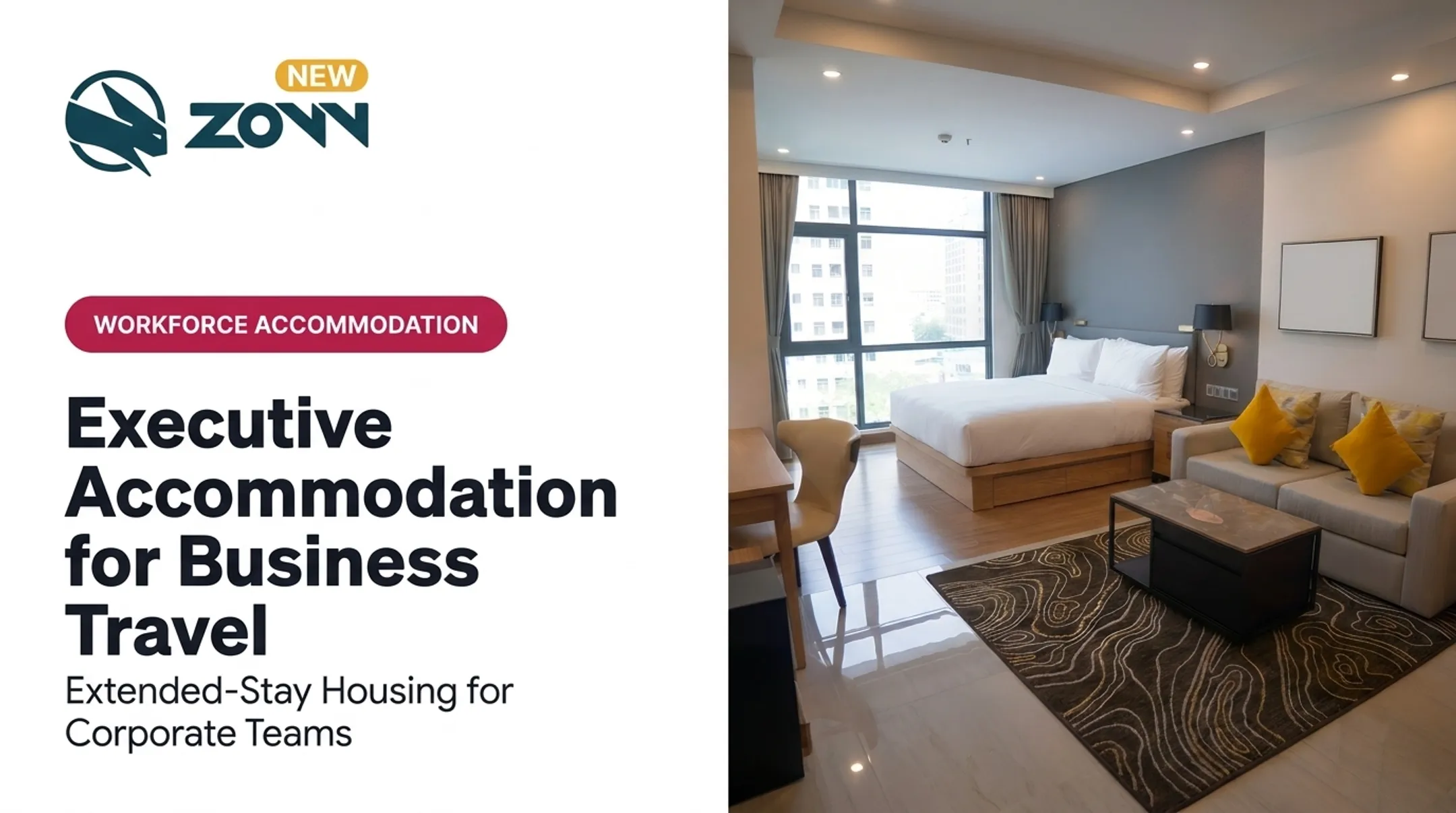
A serviced apartment commonly separates sleeping, living, dining, and working areas. A standard hotel room folds them into one.
That matters for employees who keep routines, families sharing a unit, and teams who need somewhere to work or decompress. A typical extended-stay one-bedroom suite can offer around 475 sq. ft. with a full kitchen and washer/dryer, and some brands advertise suites 50% larger than an average hotel room.
Kitchen and laundry access
Apartments typically offer a full kitchen and laundry. Hotel rooms usually have a mini-fridge and paid laundry.
Kitchens give meal flexibility and cut dining spend, while laundry means fewer errands. Specifications still differ: a kitchenette, a full kitchen, and in-unit laundry are three separate things. Home2 Suites, for instance, offers a shared laundry room.
Service and amenities
Hotels win on front-desk coverage, daily housekeeping, restaurants, room service, meeting space, and loyalty programs. Serviced apartments offer fewer services, and they vary by property.
Standards vary. The Association of Serviced Apartment Providers (ASAP) says serviced apartments normally include at least weekly housekeeping. Confirm before booking:
- Housekeeping frequency
- Reception hours
- Maintenance response time
- Wi-Fi quality
- Fitness facilities and toiletries
Flexibility, privacy, and oversight
Apartments give more autonomy and privacy. Hotels give frequent staff contact and convenience.
For corporate programs, weigh these factors:
- Extension and cancellation terms
- Guest policies and security procedures
- Traveler tracking and centralized reporting
- Emergency support
Travel risk guidance under ISO 31030 links booking records to visibility for the travel-risk function, so the booking channel matters as much as the property.

Serviced Apartments and Hotels: Definitions and Long-Stay Use Cases
What is a serviced apartment?
ASAP defines it as a fully furnished, self-contained apartment with kitchen facilities, living and sleeping areas, and bath facilities. Services normally include weekly housekeeping, linen, towels, and laundry facilities.
The model sits between a traditional rental and a hotel. Guests live independently without signing a conventional lease, and employers can arrange housing for assignments, relocations, and deployments.
Benefits and use cases of serviced apartments
Apartment-style stays fit the longest assignments:
- Employee relocations
- Consulting and technology teams
- Construction and engineering crews
- Energy and utility deployments
- Retail and telecom rollouts
- Families and project teams
Kitchens, laundry, separate work areas, and shared units all reduce friction over weeks. Some extended-stay hotels, for example, market apartment-style rooms to construction crews, with weekly and monthly project rates.
Managed, furnished apartments also help when crew sizes change often, invoices multiply, and hotel-room complaints pile up. Consolidating stays under one managed program reduces administrative burden and traveler complaints.
What is a hotel?
The US Census classifies hotels as establishments primarily providing short-term lodging, with services that may include food, conferences, laundry, and parking. Hotels are built around private rooms plus shared hospitality infrastructure.
Benefits and use cases of hotels
Hotels fit best when:
- The stay is a few nights
- The booking is urgent
- Travelers want frequent room service and don't need to cook
- The hotel's facilities are central to the work
- Apartment inventory is thin in that location
After Hurricane Helene, the 70-room Radical Hotel in Asheville housed out-of-town emergency responders needing last-minute lodging, CoStar reported. Speed and on-site support mattered more than residential features there.
Serviced Apartments vs Hotels: What Is Better for Long Stays?
Neither is universally better. The right choice depends on stay length, traveler profile, location, service expectations, group size, and your administrative requirements.
Total-cost checklist
Price each option against the same list:
- Accommodation rate
- Meals and laundry
- Parking and transportation
- Workspace or extra rooms
- Taxes, cleaning fees, deposits, and extension fees
- Internal time spent managing multiple bookings
Tax rules also change long-stay math, but not uniformly. Texas treats 30+ consecutive days as permanent residency for hotel tax purposes. New York's state exemption requires 90 days, and the NYC local rule extends to 180.

Traveler experience and corporate controls
For travelers, apartments offer privacy, cooking, and room to work. Hotels offer daily housekeeping, fitness and social facilities, and no chores. Busy hotel traffic can hurt sleep, but no recent US study establishes a productivity winner.
For employers, key controls include:
- Consolidated invoicing and multi-currency payments
- Expense visibility and traveler tracking
- Emergency support
- Coordination across several travelers or cities
This is where a managed platform helps. WWStay sources furnished apartments, serviced apartments, hotels, and temporary housing, and coordinates booking, payments, reporting, traveler support, and duty-of-care tracking in one place. It reports cutting booking time from days to hours, and uses a 30-point checklist to assess apartment safety, security, and amenities.
Situational recommendations
- Choose a serviced apartment when the stay runs several weeks or longer, travelers need a kitchen or laundry, a group needs shared space, or you want predictable program management.
- Choose a hotel when the stay is short or uncertain, daily service matters, you need immediate availability, or no suitable apartment exists locally.
- Blend both when needs differ: hotel nights on arrival, then an apartment for the assignment.
Real-World Examples and Case Studies
An apartment decision for a construction workforce
The Florida construction company above had changing crew needs, separate invoices, rate changes, and hotel-room complaints. It moved to fully managed, furnished apartments with one contact and simplified billing. Stay length and client name remain private, so treat the result as qualitative.
WWStay's documented enterprise program shows a similar pattern. A global services firm replaced fragmented sourcing with one unified program over two years, reporting 23% annual accommodation savings, 100% booking consolidation, and more than 2,900 administrative hours saved yearly.

When a hotel was the right call
The Asheville responders needed lodging immediately, with no time to source apartments. A hotel with rooms available, staff on site, and basic supplies fit that need.
Takeaway
If your stay is long, predictable, and housing multiple people, apartments usually pay off. If it's urgent or short, hotels win on speed.
Planning extended stays, group housing, or workforce accommodation? Talk through your requirements with WWStay.
Conclusion
Serviced apartments generally support longer, more residential stays. Hotels remain valuable when service intensity, speed, amenities, or short duration come first.
Compare the full picture before you book:
- Total cost and administrative workload
- Traveler needs and property standards
- Booking flexibility and reporting
- Employee safety
Evaluate the whole stay, not the advertised nightly price.
Frequently Asked Questions
How is a serviced apartment different from a hotel?
Serviced apartments usually offer furnished residential space, a kitchen, and more autonomy. Hotels emphasize private rooms, centralized services, and on-site amenities.
How long can you live in a serviced apartment?
Stays can run from a few nights to several months or longer, depending on the property, booking terms, and local rules. Confirm extension and cancellation policies first.
Are serviced apartments cheaper than hotels for long stays?
They can offer better total value when guests cook, do laundry, share a unit, or receive long-stay rates. Compare all fees and inclusions, not just the nightly rate.
What amenities are included in a serviced apartment?
Common features include a kitchen, living area, Wi-Fi, laundry access, housekeeping, utilities, workspace, and maintenance. Inclusions vary by property.
When is a hotel better than a serviced apartment?
Choose a hotel for short or urgent stays, frequent housekeeping, room service, extensive facilities, loyalty benefits, or locations with few apartments.
Do serviced apartments include housekeeping and maintenance?
Many include scheduled housekeeping and maintenance support, but frequency, response time, and fees differ. Verify these details before booking.