
Introduction
Ask three employers what "per diem housing" means and you'll get three answers. For one, it's a cash lodging allowance. For another, it's reimbursement of actual hotel costs. For a third, it's a company-booked apartment with a small meal stipend on top.
That confusion creates real problems: unclear housing coverage, rates that change by city and month, tax uncertainty, and tough choices between hotels, furnished apartments, and workforce housing.
This guide covers the components of per diem lodging, who qualifies, how the options compare on true cost, and documentation and compliance requirements. It closes with how employers manage housing for individuals and teams.
Key Takeaways
- Per diem may cover lodging, meals and incidentals, or both. The written policy decides.
- GSA rates are federal benchmarks, not a required private-employer rate.
- The best lodging option depends on assignment length, group size, commute, and total cost.
- Tax treatment turns on business purpose, tax home, duration, documentation, and accountable-plan use.
What Is Per Diem Housing and Lodging, and How Does It Work?
What per diem lodging means
GSA describes per diem as an allowance for lodging, meals, and incidental expenses (M&IE), with the two parts scheduled separately. Per diem lodging is the accommodation piece.
"Per diem housing" can mean any of these:
- A cash lodging allowance
- Reimbursement of actual accommodation cost
- Employer-booked lodging
- A split: company housing plus a smaller meal allowance
How rates and allowances are established
GSA publishes location-based rates for federal travel. A standard rate covers roughly 85% of continental US counties, while more frequently visited areas get their own rates. Private employers may borrow these figures or set their own.
For FY2027 (October 1, 2026 to September 30, 2027), the standard rate is $113 lodging and $68 M&IE. Some examples:
| Locality | Lodging per night | M&IE per day |
|---|---|---|
| Standard rate | $113 | $68 |
| New York City | $189-$358 (varies by month) | $92 |
| San Francisco | $232-$325 (varies by month) | $92 |
| Houston | $133 | $80 |
GSA lodging rates exclude lodging taxes, which federal travelers claim separately. Check the current GSA lookup before relying on any figure.
How the payment process works
The usual flow:
- Confirm assignment approval and traveler eligibility
- Book lodging under the chosen payment model
- Pay the property or issue the allowance
- Submit receipts and supporting documentation
- Reconcile final costs against policy or the allowance

Who carries the risk differs by model:
- With employee-paid lodging, the traveler fronts cash and waits for repayment
- With employer-paid lodging, the company absorbs changes and cancellations
- With a fixed allowance, the traveler keeps any savings but covers any overage, including when the assignment shifts
What a lodging rate may include
An advertised rate may or may not cover taxes, utilities, Wi-Fi, parking, cleaning, laundry, furnishings, or meals. Confirm each item in writing before booking.
Who Qualifies and What Does Per Diem Cover?
Eligibility depends on the assignment and travel policy
Eligibility usually combines a business purpose, travel away from the worker's tax home, a need for sleep or rest, and the employer's written policy. For IRS purposes, per Topic 511, work must require absence from the tax-home area substantially longer than an ordinary workday, and the traveler must need rest while away.
Distance is where people get tripped up. The IRS has no universal mileage threshold for general business travel; its 100-mile rule is a special rule for reservists. Employers set their own. Verify these items in your policy:
- Mileage threshold and worksite definition
- Paid-day rule and weekend treatment
- Assignment-duration limits
What lodging per diem generally covers
Lodging means accommodation costs. Meals and incidentals are usually tracked separately. These costs usually sit outside lodging per diem unless the policy says otherwise:
- Flights, commuting, fuel, and mileage
- Tools and personal expenses
- Relocation costs
Private employment versus government travel
Corporate policies differ from federal, military, and other government programs, which follow the Federal Travel Regulation, the Joint Travel Regulations, or agency-specific rules. When your employer's policy, contract, collective bargaining agreement, or government regulation differs from a general explanation like this one, the document controls.
Comparing Per Diem Housing Options and True Cost
Which accommodation types fit different assignments?
- Hotels and extended-stay hotels: Best for short assignments. Housekeeping and easy booking, but nightly-rate caps and limited kitchens raise total cost.
- Furnished and serviced apartments, corporate housing: Suit multi-week or multi-month stays. Kitchens, privacy, flexible leases, and room for families or small teams.
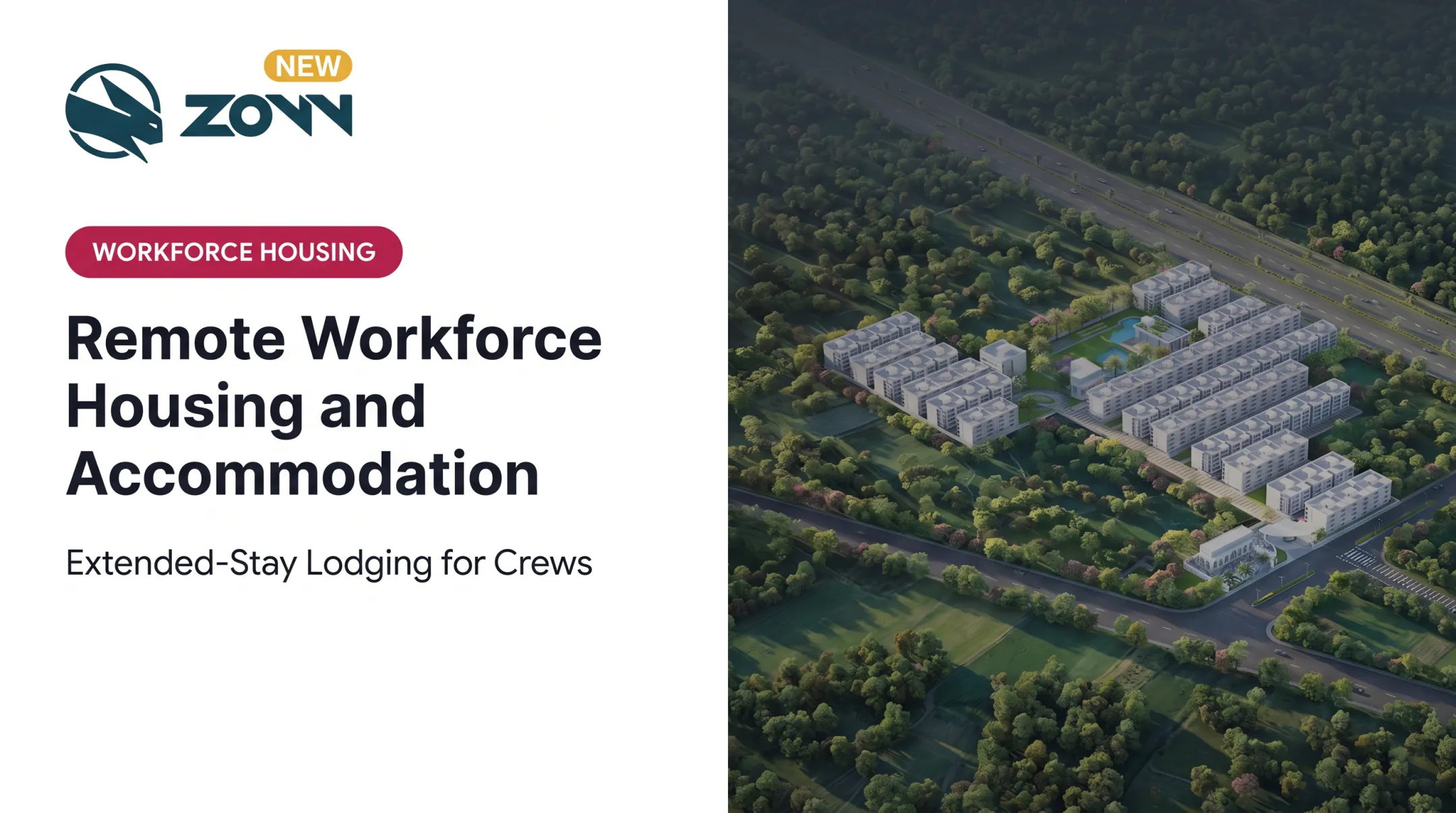
- Managed workforce or crew housing: Fits larger groups. Block availability, worksite proximity, safety controls, and consolidated invoicing.
The Highland Group's June 2026 bulletin found extended-stay occupancy 10.1 points above comparable-class hotels. Project scale can run far larger still: a Tennessee report described planning housing for up to 30,000 construction workers over three years.
How to calculate the all-in cost
Build a checklist beyond the base rate:
- Taxes, parking, cleaning, and deposits
- Utilities and Wi-Fi
- Meals, especially without a kitchen
- Commuting and transportation
- Booking fees, cancellation charges, and early-departure exposure
- Administrative time spent on bookings and receipts
The cheapest nightly rate often isn't the cheapest option. A motel 40 minutes from the site, with no kitchen and separate receipts for every traveler, can cost more than a slightly pricier apartment near the job.
Match the option to the assignment
Weigh duration, schedule predictability, traveler count, rotation pattern, family or pet needs, local supply, privacy, and odds of extension.
- Short individual trip: a hotel or extended-stay hotel.
- Months-long project team: furnished apartments with kitchens, near the client site.
- Urgent multi-city crew deployment: managed blocks with backup properties and one point of contact.
A practical comparison checklist
Before accepting any option, confirm:
- Availability and cancellation terms
- Included services and invoice format
- Safety standards and accessibility
- Commute time and internet quality
- Laundry and cooking facilities
- Support coverage after hours
Tax, Documentation, and Compliance Considerations
Per diem is not automatically tax-free
Calling a payment "per diem" doesn't make it tax-free. Treatment depends on the business connection, the employee's tax home, assignment duration, payment structure, and the employer's documentation.
Under an accountable plan, expenses need a business connection, adequate substantiation, and return of excess advances. Publication 463 lists safe-harbor periods of 30 days to substantiate an advance, 60 days to account for expenses, and 120 days to return excess.

Payments above the applicable federal rate are treated as wages. Confirm current IRS guidance with a professional.
The tax-home and temporary-assignment questions
A tax home is the general area of your main place of business or work, not necessarily your family residence. Itinerant workers with no regular place of business and no regular home are treated as having a tax home wherever they work, so they aren't considered traveling away from home.
The one-year rule matters too. An assignment expected to last a year or less can be temporary. If it's expected to exceed one year, or the expectation changes, the location becomes indefinite from that point.
Travel expenses are then no longer deductible as away-from-home expenses, and lodging and per diem payments may become taxable.
Receipts, records, and substantiation
Records should establish:
- Dates and location
- Business purpose and traveler identity
- Lodging invoices and proof of payment
- Evidence of employer approval
Standard-rate methods let travelers substantiate covered amounts without proving every dollar. If the employer reimburses actual lodging instead, keep evidence of the actual expense.
For IRS high-low substantiation from October 1, 2026, Notice 2026-60 sets total daily rates of $329 for high-cost localities and $230 elsewhere.
Employer policy and compliance safeguards
Put it in writing. A solid policy should cover:
- Eligibility, distance, and approved locations
- Lodging and meal components
- Paid travel days, weekends, and extensions
- Cancellations, early departures, and receipts
- Tax handling and dispute escalation
Then get advice from a qualified tax, payroll, or legal professional. State rules vary. California Labor Code section 2802, for example, requires employers to indemnify employees for necessary work expenses.
Managing Per Diem Housing for Teams and Workforces
Operational requirements for group and extended-stay programs
Crews need more than a room rate. Construction, energy, rollout, and relief teams need confirmed inventory, coordinated arrivals, flexible changes, safety visibility, and one accountable support channel.
Evaluate providers on:
- Property quality and safety checks
- Accessibility, internet, and transport access
- Maintenance response
- Cancellation flexibility
- Ability to support several locations at once
How a centralized accommodation platform can help
A managed platform combines search, booking, payments, reporting, guest tracking, and traveler assistance in one workflow. That matters because a GBTA survey found 72% of travel buyers named travelers finding cheaper hotels outside managed channels as a top pain point.

WWStay serves corporations, relocation companies, travel management companies, and project workforces. It sources furnished apartments, temporary housing, hotels, and serviced apartments in the US and abroad, typically for stays of three weeks to six months or longer. Bookings run through Zovv, WWStay's AI platform, which applies your travel policy in real time.
What the platform covers:
- Professionally managed inventory checked against a 30-point safety, security, and amenity list
- Booking time cut from days to hours
- 24/7 traveler support
- Dashboards for expenses, savings, and employee locations
- Multi-currency payments, plus ZovvPay virtual cards issued per booking, pushed to the property, and tracked in a payables ledger
If you are weighing housing for one traveler or a multi-city team, WWStay can walk through your requirements.
Frequently Asked Questions
Does per diem include housing?
It can. Per diem may include a lodging allowance, meals and incidentals, or both, depending on the employer or program. Employer-arranged housing may replace a cash lodging payment.
What is a typical per diem rate?
It varies by location, travel dates, employer policy, and whether lodging and meals are split. The FY2027 GSA standard is $113 lodging and $68 M&IE; check the GSA lookup or your employer.
What qualifies me for per diem?
Generally, business travel away from your tax home on a temporary assignment that requires overnight rest. Your employer's eligibility and documentation rules also apply.
How far do you have to live for per diem?
No single distance rule fits every private employer or program. Check your written policy, and distinguish local commuting from qualifying business travel.